Tanzanian green coffee beans graded on a sample tray

Coffee knowledge

Understand Tanzanian coffee before you buy.

A practical guide to the species, grades, processing methods and market segments that shape every Tanzanian green coffee purchase.

Tanzania at a glance

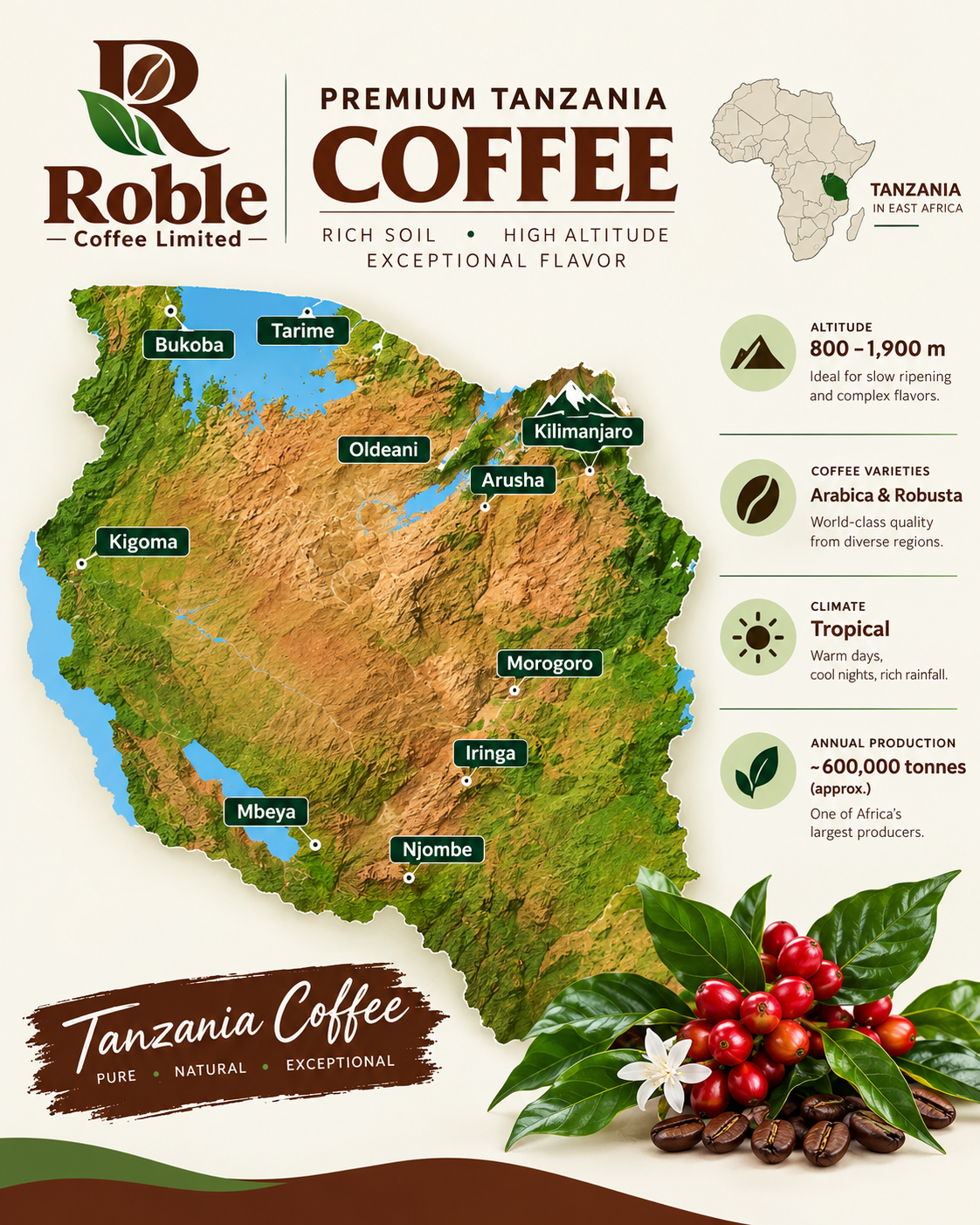
One origin, many distinct growing regions.

Tanzanian coffee grows from the shores of Lake Victoria to the slopes of Kilimanjaro and the southern highlands of Mbeya and Songwe. Altitude, variety and climate shift from region to region — which is why every offer we make starts with a specific area, not a country blend.

800–1,900m
Growing altitude
Arabica + Robusta
Species exported
Tropical
Highland climate
Dar es Salaam
Export port
Map of Tanzania's coffee-growing regions — Bukoba, Tarime, Kilimanjaro, Arusha, Kigoma, Morogoro, Iringa, Mbeya and Njombe — with altitude, variety and climate notes

01 · By species

Arabica and Robusta — two different buying conversations.

Graded Tanzanian Arabica green coffee beans on a sample tray

Arabica

Tanzania's highland Arabica grows between 1,200 and 2,000 metres, where cool nights slow cherry maturation and build the bright, structured cups the origin is known for.

Regions
Kilimanjaro · Mbeya · Songwe · Ruvuma
Varietals
Bourbon · Kent · Blue Mountain · Compact
Grades
AA · AB · PB (peaberry)
Preparation
Predominantly washed; naturals in southern regions
Buying basis
Approved sample, cup score and physical specification
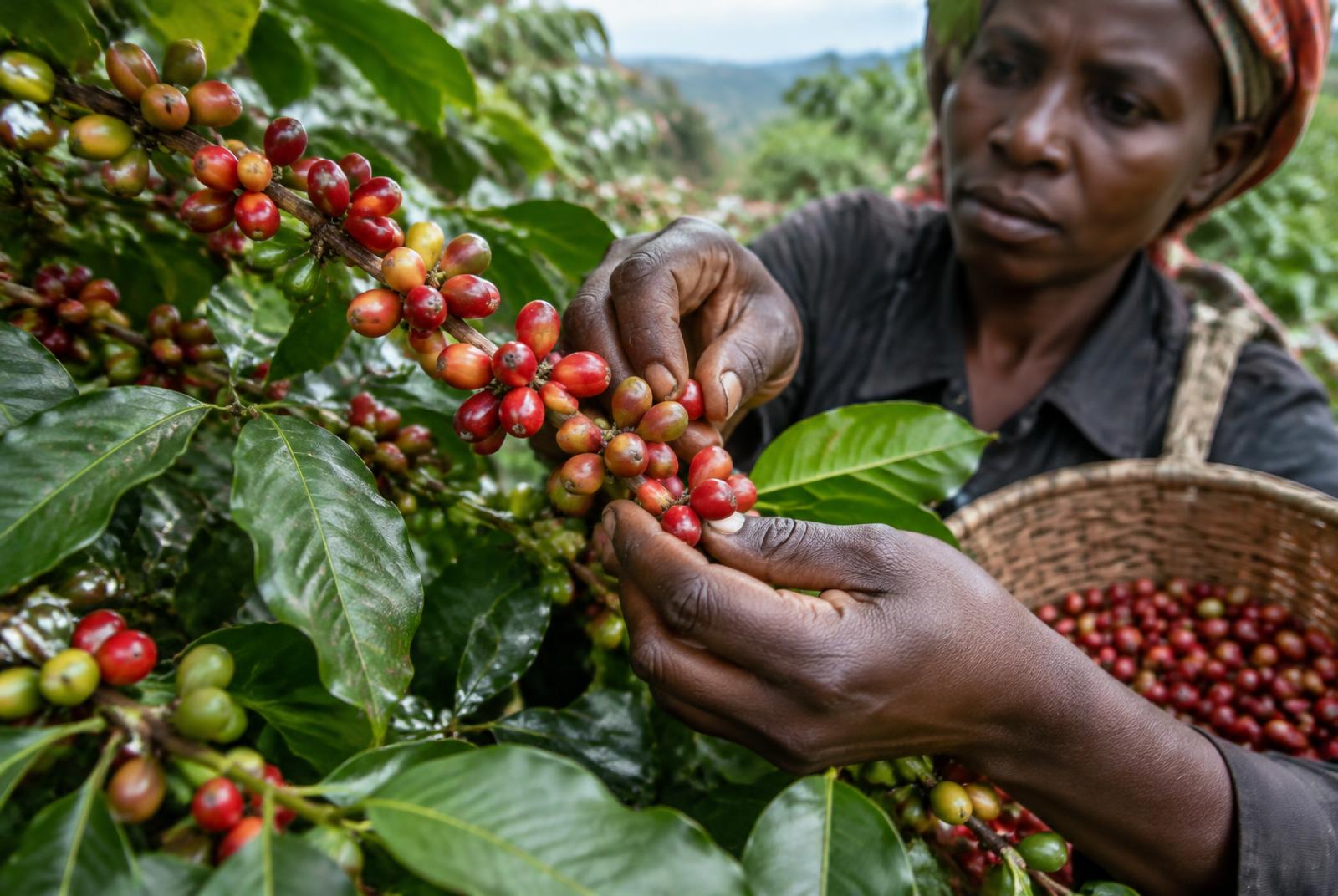
Ripe coffee cherries being selected by hand in Tanzania

Robusta

Tanzanian Robusta comes mainly from the Kagera region around Lake Victoria, valued by roasters for body, crema and blending strength.

Regions
Kagera — Bukoba · Karagwe
Altitude
900–1,500m
Grades
FAQ · Screen 15–18
Preparation
Natural; washed in smaller volumes
Buying basis
Screen size, defect count and moisture rather than cup score

02 · By market segment

Specialty and commercial are buying disciplines, not quality tiers.

The same Tanzanian regions supply both, and the same mill often prepares both. A well-prepared commercial parcel can outcup a poorly separated specialty lot — the difference is how the coffee is bought, not how good it is.

Specialty lots

Tightly separated lots — by region, processing station or delivery period — bought on lot identity and an approved cup. Volumes run from bags to part-containers, and traceability typically reaches station level.

  • Bought on the cup
  • Sample approval before contract
  • Station-level traceability

Commercial lots

Repeatable specifications bought as a programme: grade, screen and defect basis held consistent across crops and shipments. Volumes run in containers, often across multiple shipments per season.

  • Bought on specification
  • Type sample against spec
  • Region-level traceability

03 · By processing method

Processing is the lever a buyer can specify most directly.

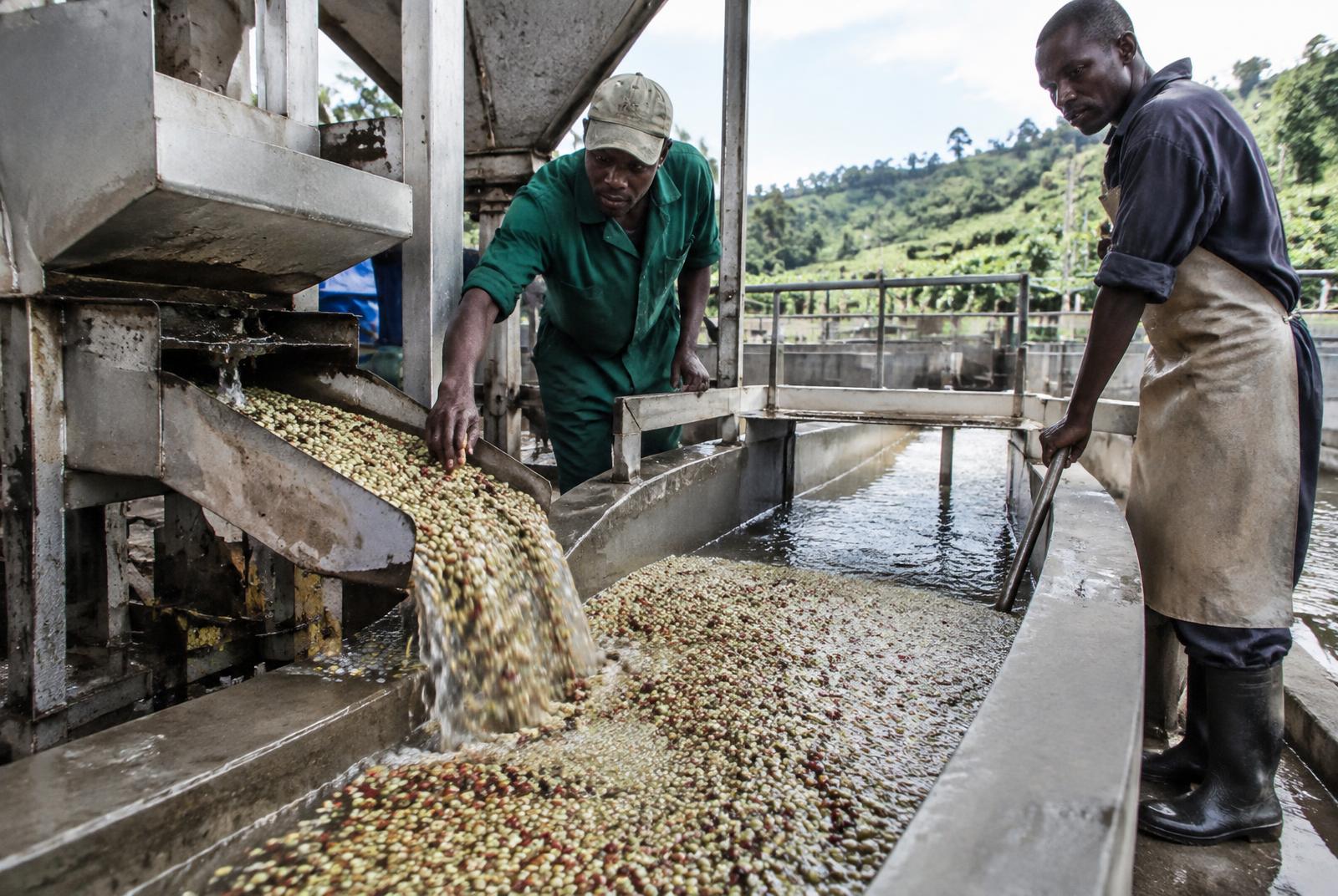
Coffee being washed in channels at a Tanzanian wet mill

Washed

Clean acidity, lighter body, origin character reads clearly

The standard preparation across Kilimanjaro, Mbeya and Ruvuma — parchment is fermented, washed and sun-dried before milling.

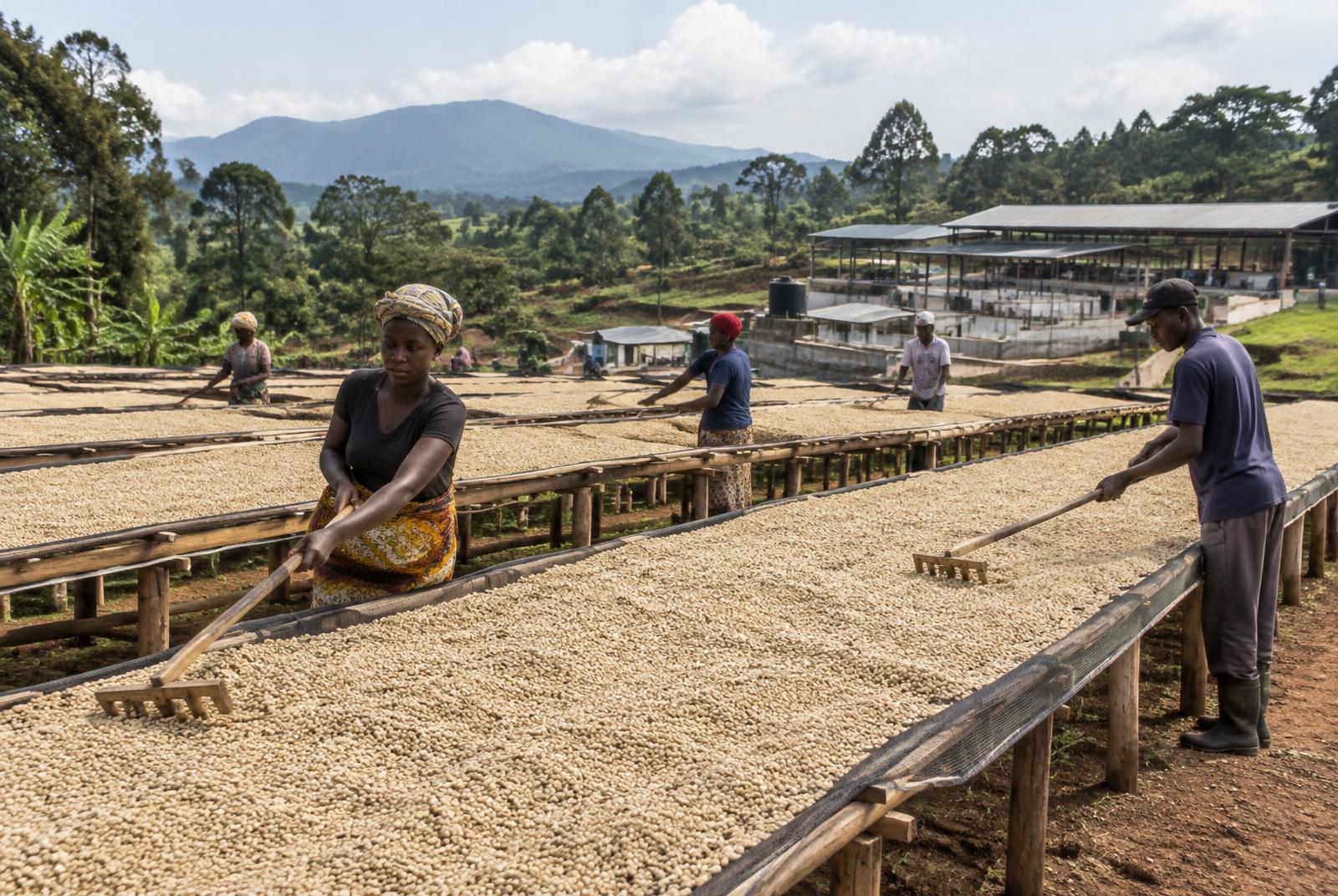
Natural process coffee drying on raised African beds

Natural

Heavier body, lower acidity, pronounced fruit sweetness

Whole cherry dried on raised beds, common in Songwe and Kagera. Drying faults hide in the green — we cup more cups before approval.

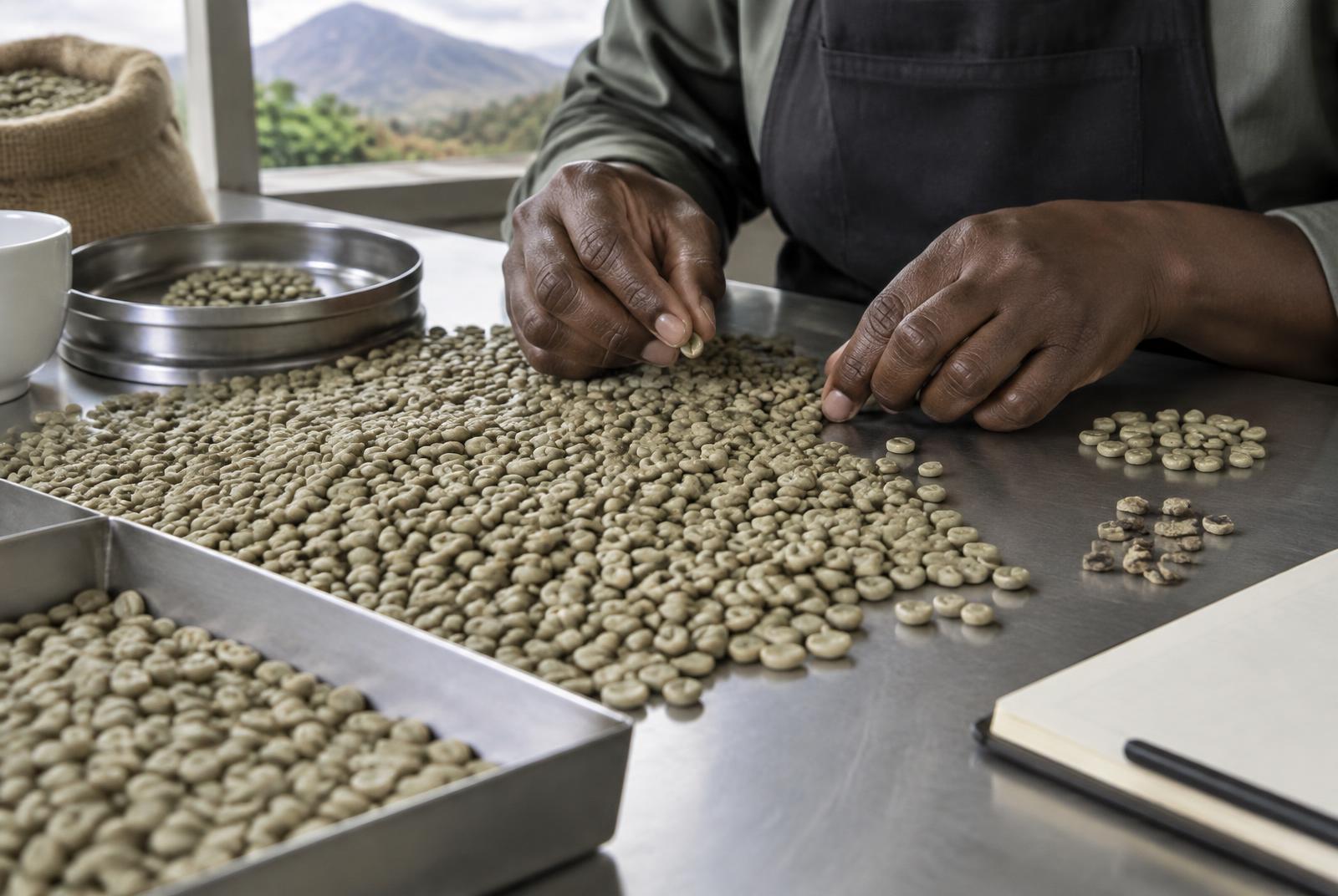
Green coffee beans prepared for grading

Honey & experimental

Between washed and natural — sweet, rounded acidity

Small, lot-specific volumes appear seasonally. Availability is confirmed against samples rather than assumed.

04 · Tanzanian grades

The full Tanzanian grade ladder.

Grading happens at the dry mill after hulling. Most grades are screen-size separations; PB is separated by shape, TT by density and UG by residual cleaning.

GradeScreenSpeciesWhat it means
AAScreen 18+ · ≈7.1mmArabicaThe largest flat beans after screening. Tanzania's most quoted export grade — a size class, not a cup class.
AScreen 17 · ≈6.75mmArabicaFlat beans held on screen 17, directly below AA in the size run.
ABScreen 16–17ArabicaCombined A and B parcel and usually the largest block of an outturn — practical for repeat, multi-container programmes.
BScreen 16 · ≈6.35mmArabicaFlat beans held on screen 16.
CScreen 14–15ArabicaSmaller flat beans, depending on mill preparation.
PBOwn run · 12–14ArabicaPeaberry — one rounded seed per cherry. Kept apart for its shape and density, which roast differently.
EAbove 18/19ArabicaOversized, often joined beans separated above AA. Small volumes, uneven shape.
TTDensity-separatedArabicaLighter beans lifted from AA/A/B parcels on the gravity table; typically a lighter, flatter cup.
UGResidualArabicaParcels below named-grade preparation, sold on stated defect and screen tolerances.
FAQScreen 15+ (or 18 sized)RobustaNatural Kagera Robusta, contracted on screen and defect terms rather than the Arabica ladder.

What a grade fixes

The physical deliverable.

  • Bean size — the screen the parcel is retained on
  • Bean shape — peaberry separated from flat beans
  • Density — for TT lifted off the main run
  • That the parcel met a named preparation standard

Use the grade for the physical spec, the approved sample for the cup — both belong in the contract.

What a grade doesn't tell you

Specify these separately.

Cup quality
Same grade, same mill, can cup points apart. Only the approved sample confirms it.
Defect count
Counted on a defined sample against an agreed weighting table.
Moisture
Specify a range and the measurement method.
Crop year
A grade name doesn't separate current crop from stored coffee.
Density
Bulk density (g/L) guides roast planning.
Processing
Washed, natural and honey can carry the same grade.
Traceability
Region, station or day lot are separate claims.
Water activity
Storage stability — related to, but not derived from, moisture.

Ready to put this into practice?

Tell us your target profile and volume — we will match it against current Tanzanian availability.

Request an offer sheet

06 · Cup scores

How cup scores frame a purchase.

Coffee is cupped on a 100-point scale. The score summarises fragrance, flavour, acidity, body, balance and clean cup — useful for positioning a lot, but always read alongside the cupping notes and physical analysis.

Specialty lots (85+)85–88 pts
Premium lots (82–84.9)82–85 pts
Exchange / commercial gradeBelow 82 pts

07 · Harvest calendar

When Tanzanian coffee comes to market.

Indicative windows — timing shifts each season with rainfall and altitude.

Northern Arabica

Harvest

Kilimanjaro, Arusha · Jul – Dec

Typical shipment

Oct – Mar

Southern Arabica

Harvest

Mbeya, Songwe, Ruvuma · Jun – Oct

Typical shipment

Sep – Feb

Robusta

Harvest

Kagera · May – Sep

Typical shipment

Aug – Dec

08 · Buyer FAQ

Common questions from roasters.

What terms do you sell on?

We sell FOB Dar es Salaam. Other arrangements can be discussed with our desk.

How is coffee packed?

Green coffee is normally shipped in 60kg jute bags. Lined bags or other packaging can be requested.

Can I get samples before buying?

Yes. Pre-shipment and offer samples are available for qualified buyers on request.

What volumes can I buy?

We work from part-container to full-container volumes. Tell us your needs and we'll advise what's possible.

Which grade should I choose?

AA and AB suit most specialty programmes; PB offers a distinct cup; FAQ and Robusta grades suit blends and espresso bases.